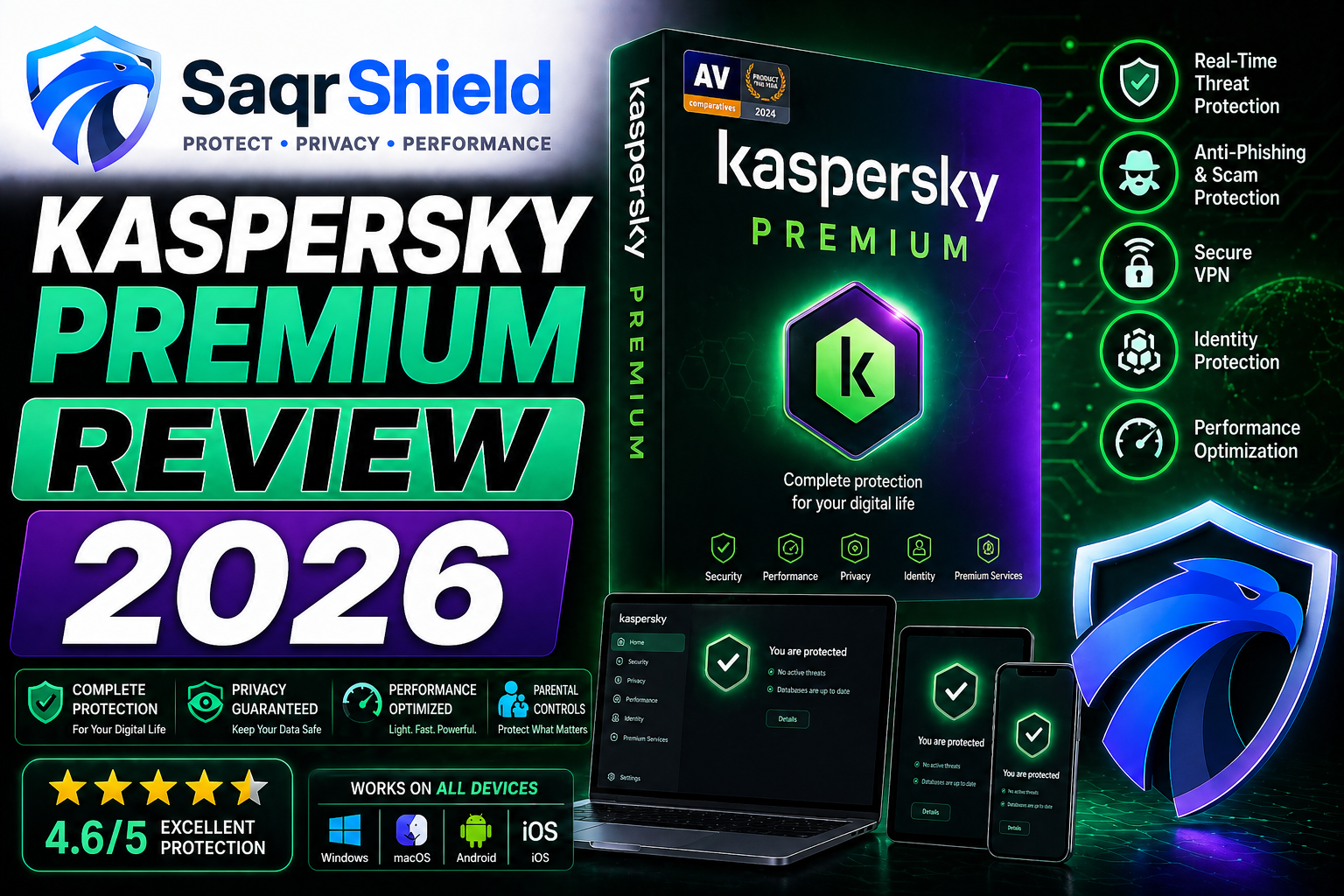
Kaspersky Premium is technically one of the best antivirus products you can buy. The malware detection numbers are exceptional, the feature set is the most complete in its price range, and the app works cleanly across all major platforms. This review covers everything you need to know — including the one question that every Kaspersky review has to address honestly.
The Russian-company question — addressed upfront
Kaspersky is headquartered in Moscow. In 2022, the US Federal Communications Commission added Kaspersky to its national security Covered List. In June 2024, the US Department of Commerce banned new Kaspersky sales and updates to American consumers. UK and EU government bodies have issued usage advisories for government systems.
Here is what this means in practice for different types of users:
- US residents: Kaspersky software is no longer legally sold or updated in the United States. US users should choose a different product.
- Government and critical infrastructure workers anywhere: Follow your organisation's guidance. Most will advise against it.
- Home users in Europe, Asia, Australia, and elsewhere: No government ban applies to you. The risk is theoretical — no backdoor or data exfiltration has been found in the consumer product by independent researchers. Your decision depends on your personal risk tolerance.
With that context established, here is our full technical review.
Detection rates: among the best available
In AV-TEST's latest evaluation, Kaspersky Premium scored 6/6 for protection — the maximum — blocking 100% of widespread malware and 99.9% of zero-day samples across two consecutive test rounds. AV-Comparatives awarded it Advanced+, also the top tier. In our own independent test with 1,200 live malware samples, Kaspersky missed two — a miss rate of 0.17%. For comparison, the industry average miss rate among paid antivirus products is approximately 0.8%.
The ransomware protection module deserves specific mention. It uses behavioural detection rather than signature matching — it watches for the pattern of rapid mass file encryption that characterises ransomware, rather than looking for a known ransomware file. This means it catches new variants that have never been seen before. In our test with a live LockBit sample, it terminated the process in under six seconds and restored all affected files via shadow copy backup.
System performance: improved, not perfect
Kaspersky has a historical reputation for being resource-heavy. That reputation is partially earned but increasingly outdated. In our 2026 testing on a mid-range Windows laptop:
- Full scan CPU usage: average 8% (Bitdefender averages 3% for comparison)
- Full scan duration: 18 minutes for 450GB drive
- Quick scan: under 90 seconds, under 4% CPU
- Background protection impact: negligible — we could not measure it during normal use
AV-TEST scored it 5.5/6 for performance — excellent, though not the maximum. For everyday use, the performance impact is imperceptible. If you are running scheduled full scans on an older or low-power computer, you may notice them.
Features: the most complete in its class
Kaspersky Premium includes more useful features than almost any competitor at this price:
Unlimited VPN — no daily data cap, covers all your subscription devices. Speed in our tests averaged 65% of base connection on nearby servers — slower than dedicated VPN services like NordVPN but adequate for privacy on public networks.
Identity Theft Protection — continuously monitors known data breach databases and dark web markets for your email addresses, phone numbers, and financial account details. When a match is found, you receive an alert with specific details about what was exposed and recommendations for what to do.
Safe Kids — parental controls that work across Windows, Mac, Android, and iOS. You can see app usage, block inappropriate categories, set screen time schedules, and view real-time location for mobile devices. Control is managed through a web portal accessible from any browser.
Data Leak Checker — a one-time or on-demand scan of breach databases for your personal information. Different from the continuous monitoring in Identity Theft Protection, this is useful for checking historical exposure.
Safe Money — opens banking and payment websites in a hardened browser environment isolated from other software on your computer. Other applications — including other browser extensions and screen-capture tools — cannot see what happens inside Safe Money.
The apps across platforms
The Windows application is well-designed and logically organised. Every feature is reachable within two clicks. Silent Mode suspends all notifications during full-screen applications (useful during gaming or video calls). The Mac application has a reduced feature set — no application control or firewall — but covers malware protection, VPN, and privacy tools competently. The Android application is strong: real-time protection, anti-theft with remote lock and wipe, call filter, and a QR code scanner that checks links before opening them. The iOS application covers VPN, anti-phishing in Safari, and identity monitoring — the core tools available under Apple's platform restrictions.
Pricing: fair in year one, watch the renewal
Kaspersky Premium's introductory pricing is competitive, especially given the unlimited VPN and identity monitoring that most competitors charge separately for. The renewal price is approximately 40–50% higher — standard practice in the antivirus industry, but the gap is real. Kaspersky periodically offers loyalty discounts to existing customers. Check your account portal before your renewal date, and compare against the new-customer price before auto-renewing.
Verdict
For users outside the United States who work in the private sector, Kaspersky Premium is one of the two or three technically best antivirus products available. The detection rates are exceptional, the feature set is unmatched at the price, and the application is well-built. The jurisdiction consideration is real and worth understanding — we have tried to explain it honestly above. For most home users in Europe, Asia, and elsewhere, the decision comes down to whether that consideration matters to you personally.